



As is the case with any piece of equipment, taking steps to maintain a lawn mower is crucial to ensuring it operates smoothly for years to come. This includes checking a major item off the maintenance checklist: Changing the oil.
Whether you own a push mower or a riding mower, regularly changing the engine oil at the necessary intervals can help improve performance, reduce engine wear, and extend the lifespan of your equipment. Follow the steps below to learn how to properly change lawn mower oil, including the tools you will need to be successful.
Key Takeaways
- Both push and riding mowers require oil changes to maintain performance.
- Always check your owner's manual for information on oil type and capacity for your specific model
- Tools you will need for an oil change include a drain pan, funnel, fresh oil, a new oil filter, gloves, and towels.
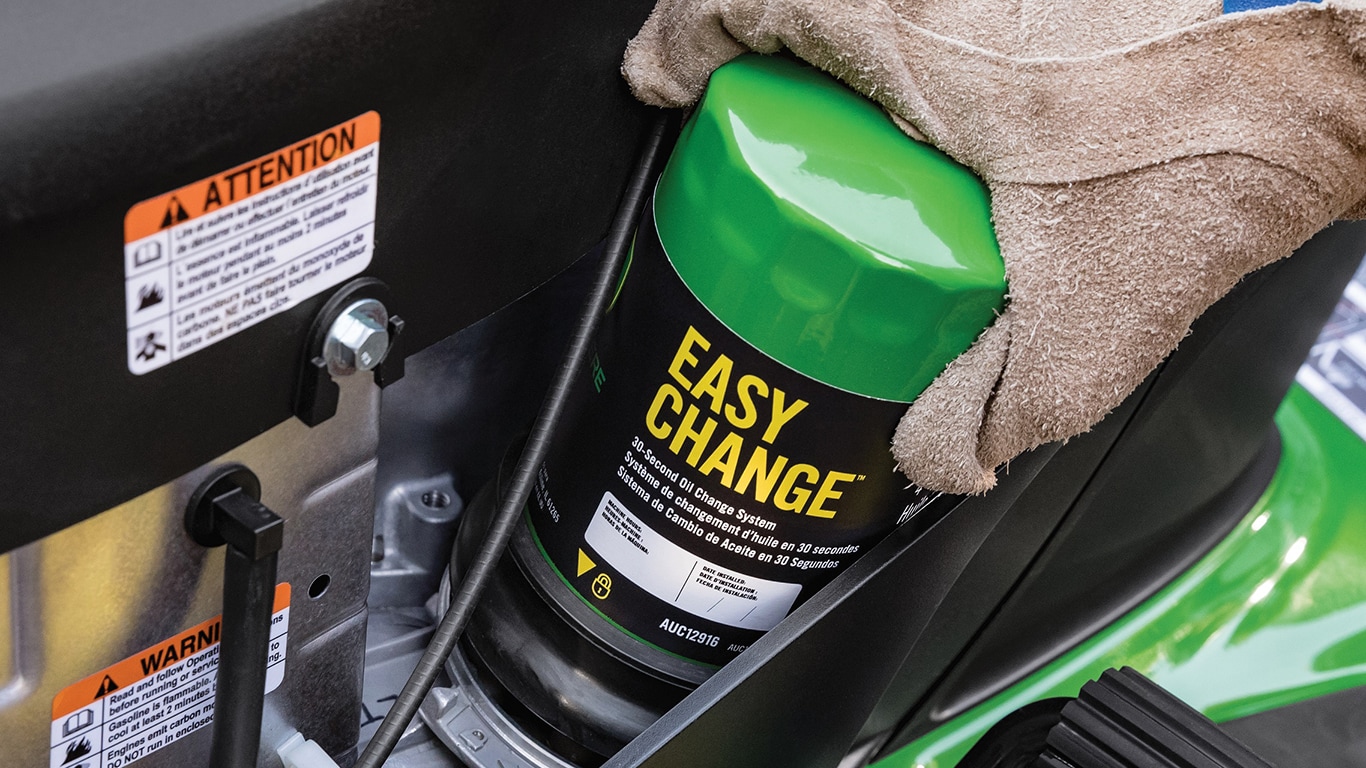
- John Deere Easy Change™ simplifies lawn mower maintenance by replacing both the oil and the filter with a single replacement canister, eliminating the need to drain the oil.
What Tools Do I Need to Change Lawn Mower Oil?
Before you start changing the oil on your lawn mower, it is important to gather the right tools. This will help the process go smoothly and ensure your mower is properly serviced. Here are several of the basic tools you will need:
- Drain pan to collect the used oil
- Fresh Engine Oil (check your owner's manual for the correct type for your mower)
- Funnel to pour in new oil cleanly
- Socket wrench for loosening the filter or drain plug (check the manual for the correct size)
- New oil filter (typically only for riding mowers)
- Gloves to protect your hands
- Towels or rags for easy cleanup
How to Change Lawn Mower Oil
While performing an oil change for the first time can seem intimidating, it can actually be quite simple when done correctly. Follow the 10 steps below to successfully change your lawn mower oil:
1. Warm Up the Engine
2. Park and Turn Off the Mower
3. Position the Drain Pan and Drain Old Oil
4. Allow Oil to Fully Drain
5. Close the Drain Plug
6. Remove and Drain the Oil Filter (If Applicable)
7. Prepare and Install New Filter
8. Add New Engine Oil
9. Run the Engine to Circulate Oil
10. Check Oil Level and Inspect for Leaks
1. Warm Up the Engine
Start by running the engine for 1-2 minutes to warm up the oil and help it drain more easily.
2. Park and Turn Off the Mower
Next, ensure the mower lawn tractor is parked on a flat, level surface. Engage the parking brake, turn off the engine, and remove the key from the ignition before beginning the oil change.
3. Position Drain Pan and Drain Old Oil
Place a drain pan underneath the engine’s oil plug. Carefully remove the drain plug and begin to drain the oil.; oOperators should take extra care during this step as the oil has a tendency to be very hot.
4. Allow Oil to Fully Drain
After removing the drain plug, allow several minutes for the old oil to completely drain. You may loosen the dipstick to increase oil flow until it is fully drained out of the engine.
5. Close the Drain Plug
Once all of the oil has drained, securely reinstall the drain plug and move the drain pan beneath the oil filter.
6. Remove and Drain the Oil Filter (If Applicable)
Remove the oil filter, either by hand or using a wrench, by turning it counterclockwise. Next, drain all of the oil out of the filter and dispose of it properly. Then, use a clean rag or shop towel to remove dirt or old oil from the filter area. Not all mowers have an oil filter, so you may be able to skip this step depending on your mower's specifications.
7. Prepare And Install New Filter
Put a few drops of clean oil onto the rubber gasket of the new oil filter, spin the filter onto the engine, and turn until the gasket comes into contact with the engine. Then, tighten the filter a half turn by hand.
8. Add New Engine Oil
Using a funnel, add new oil to the engine. Make sure you use the correct type and amount as specified in your owner's manual.
9. Run the Engine to Circulate Oil
Next, secure the dipstick and oil fill cap and run the engine for 30-60 seconds to pump oil into the new filter.
10. Check Oil Level and Inspect for Leaks
Turn off the engine and allow it to sit. Next, check the oil level to make sure that it is not overfilled. Finally, check for leaks around the drain plug and oil filter.
How Much Oil Do I Put In My Lawn Mower and How Often Should It Be Changed?
Most manufacturers recommend changing oil after the first 5-8 hours on a new engine and then at intervals specified in the operator's manual. Many residential lawn mowers require oil changes approximately every 50 hours or annually, but requirements vary by manufacturer and engine type. Always consult your operator's manual for the correct capacity.
In addition to following recommended service intervals, there are several common signs that your lawn mower oil may need to be changed. These signs include black or gritty oil on the dipstick, unusual engine noise, reduced mower performance, or smoke coming from the engine. If any of these signs occur, it is recommended to change the oil as soon as possible to avoid damage.
Adding too much or too little engine oil can affect engine performance and could damage your mower over time. After filling the engine, use the dipstick to confirm the oil level is within the recommended range before operating the mower.
For general reference, the chart below provides typical oil capacities and oil-change intervals:
| Lawn Mower Type | Oil Capacity | When to Change Oil |
|---|---|---|
| Push Mower | Approximately 15-18 ounces | Every 50 hours |
| Riding Mower | Approximately 48-64 ounces | Every 100 hours |
Oil capacities and maintenance schedules vary. Follow the specifications and service intervals provided in your lawn mower’s operator’s manual.
What Type of Oil Should I Put in My Lawn Mower?
Most 4-cycle lawn mowers use either SAE 30 or SAE 10W-30 engine oil. Some modern engines also permit synthetic equivalents, including synthetic 5W-30, depending on manufacturer recommendations. The correct oil type greatly depends on your mower model, engine design, and operating temperature, so be sure to refer to your owner’s manual for more information.
Below is a general guide to common lawn mower oil types and their recommended use:
| Oil Type | Recommended Use |
|---|---|
| SAE 30 | Ideal for small engines and warmer temperatures. |
| SAE 10W-30 | Can be used in all climates, but it may increase oil consumption. |
| SAE 5W-30 | All-purpose oil with better performance in cold weather. |
| Synthetic SAE 5W-30 | Offers improved temperature stability, enhanced cold-weather starting performance, and increased resistance to oil breakdown. |
| SAE 15W-50 | Ideal for continuous commercial use. |
What is John Deere Easy Change™ 30-Second Oil Changing System?
For those who would like the process of changing their lawn mower’s oil to be as quick as possible, John Deere developed the Easy Change™ 30-Second Oil Change System. Available on select 100 Series Riding Lawn Tractors, this system allows customers to replace both the oil and the oil filter by twisting on a new single replacement canister, eliminating the need to drain the oil.
With the Easy Change system, several steps in the traditional oil change process can be eliminated. Operators still need to park the mower on a flat surface, secure the machine, and allow the engine to cool before beginning maintenance. Wear gloves and safety glasses, and disconnect the spark plug wire when recommended by the manufacturer. Once completed, the existing canister can be removed and replaced in just 30 seconds, helping to reduce mess and simplify the maintenance process.
Keep Your Lawn Mower Running Smoothly All Season Long
Changing the oil regularly on your lawn mower ensures the longevity of your engine and top performance of your mower. Regular oil changes also help to maintain proper lubrication of the engine, while also improving cleanliness, helping with engine cooling, and prolonging the lifespan of your mower.
Be sure to check your oil level regularly and follow your operator's manual for the correct maintenance intervals, oil type, and oil capacity for your specific model.
For more information regarding John Deere lawn care equipment and maintenance systems, such as John Deere Easy Change, contact your local John Deere dealer.
How to Change Lawn Mower Oil FAQs
How often should you change lawn mower oil?
Oil change intervals vary by manufacturer and mower type. Many residential mowers require oil changes annually or after approximately 50 hours of operation. Always consult your operator's manual for the recommended interval.
How long does it take to drain oil from a lawn mower?
Draining the oil from a lawn mower typically takes between 1 and 5 minutes. Warmer oil will generally drain more quickly.
What happens if I put too much oil in the engine?
If you overfill your engine with oil, the oil will begin to foam when the engine is running. In addition, oil will not lubricate the engine properly, which can cause potential engine failure.
Can you use synthetic lawn mower oil?
Synthetic oil is common and can be used in many cases. Synthetic oil may make your machinery perform better and extend its lifespan. However, compatibility depends on the engine design, so refer to your owner's manual for more information.
How do you check your lawn mower engine oil level?
To check the oil on your lawn mower, place the mower on a flat surface and turn off the engine. Next, remove the dipstick, wipe it clean, and then reinsert it. Remove the dipstick once again to view the oil level. The oil level should fall within the marked range on the dipstick.
What happens if you don’t change your lawn mower oil?
Failing to change your lawn mower oil can lead to engine decline and poor performance due to reduced lubrication. Over time, this can cause overheating and shorten the lifespan of your engine. This is why it is recommended to change your mower oil at least once a year.
What is the difference in oil changes for push vs. riding mowers?
Both push and riding mowers need regular oil changes. Push mowers typically use less oil and do not often require an oil filter, which simplifies the oil-changing process. Riding mowers usually require more oil and an oil filter, which can increase the maintenance steps.
Where do you dispose of old lawn mower oil?
Used lawn mower oil should not be poured down the drain. Instead, collect the used oil in a sealed container and dispose of it at an authorized recycling center or other facility that accepts used motor oil.