



Homeowners everywhere know that achieving a pristine lawn takes time, effort, and dedication. That said, not everybody knows the intricacies of this task, like how long to wait after planting grass to mow.
Key Takeaways
- Newly planted grass is generally ready for its first mow when it reaches about 3 to 4 inches tall, the soil is firm, and the roots are anchored well enough to resist gentle pulling.
- Timing varies by grass type, weather, soil conditions, and whether the lawn was seeded, sodded, plugged, or sprigged. Seeded lawns may take several weeks, and in some cases up to about 8 weeks, before they are ready.
- Before mowing new grass, check soil firmness, remove debris, inspect mower condition, and make sure the grass is dry.
- During the first mow, avoid removing more than one-third of the grass blade height, use sharp blades, and avoid unnecessary turns or repeated passes.
- Water new grass lightly and frequently during establishment to keep the seedbed moist, then gradually transition to deeper, less frequent watering after the lawn has been mowed a few times.
When Should You Mow New Grass?
Before starting up your lawn mower for the first time of the season, it is important to know when to mow new grass, as it is essential for its health. If you mow too soon, the seeds will not have enough time to develop a root system, and if you mow too late, it can put significant stress on your lawn.
A general rule of thumb is that operators should make sure the grass is dry to the touch and stands at least 3-4 inches tall before mowing. For newly seeded lawns, this may take several weeks and, in some cases, up to about 8 weeks. Use grass height and root anchoring as the final readiness checks.
6 Things to Check Before Mowing New Grass
In addition to waiting for newly planted grass to grow before mowing, homeowners should take the following factors into consideration to get their lawn exactly where they want it to be.
1. Check the Grass Height
The most important factor when determining when to cut newly seeded grass is its height. In most cases, new grass is ready to be mowed when it reaches 3-4 inches tall. The exact height can differ based on grass type and growing conditions.
2. Examine the Soil Conditions
It is important to ensure that the soil is firm when mowing new grass. Mowing over soft soil can significantly damage the health of young grass and prevent it from cutting evenly. It is also not good for your mower’s longevity if it gets clogged with wet grass.
3. Inspect the Root System
Inspecting the root system involves gently pulling on the grass to understand whether it is properly anchored to the ground. If the grass is easy to pull up from the ground with little effort, it may not be ready for mowing.
4. Remove Debris from the Lawn
It is essential to remove debris from your lawn before mowing to prevent damage to your young grass. Make sure that all large sticks, rocks, and other debris are cleared from the grass before going over it with a mower.
5. Check Your Mower's Condition
Raise the mower deck height to avoid cutting your grass too short and ensure you are just trimming it. You should also make sure the mower blades are sharp, as dull blades can tear the grass. Finally, you should clean your mower to make sure it is working properly and won’t damage the grass.
6. Plan Your Mowing Pattern
Learn how to mow your lawn effectively by planning out your mowing pattern ahead of time. Changing the pattern of how you mow helps the grass grow more upright, so some differentiation over time is useful.
3 Tips for Mowing New Grass
After checking and planning your first mow with freshly seeded grass, how you mow your lawn is just as important.
Below are 3 tips for mowing your lawn with new grass to encourage healthy growth:
1. Use Sharp Mower Blades
Mowing with sharp mower blades helps ensure the grass is not put under unnecessary stress. Cutting with dull blades will tear the grass more and potentially lead to lawn damage, making it more likely it will brown or get a disease.
2. Use Care With Riding Mowers
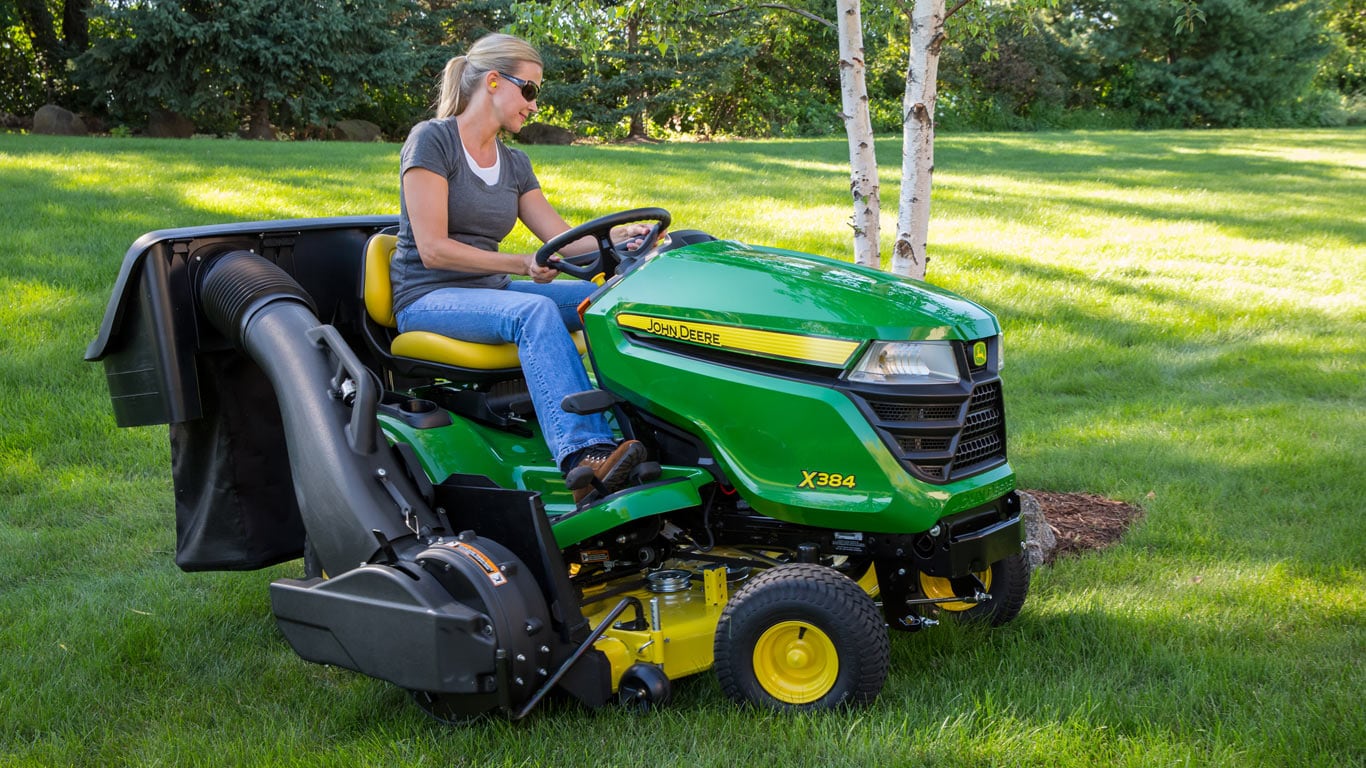
Riding mowers can put additional stress on a lawn due to their heavy weight and turning radius, damaging soft soil and young roots. When mowing new grass for the first time, take it slowly and avoid unnecessary turns and repeated passes over the same area.
3. Keep Grass Clippings on the Lawn
Leave short, dry clippings on the lawn when they can filter back to the soil, but remove heavy clumps that could smother new grass.
Choose the Right Lawn Mower for New Grass
So you’ve planted new grass and now you’re looking for a quality lawn mower to maintain your lawn? John Deere has a variety of lawn mowers that are sure to suit your lawn care needs, no matter the size of the landscape.
Operators should look for a mower with adjustable cutting heights, sharp blades, and an appropriately sized mower deck. All of these features can help protect your newly planted grass and support healthy lawn growth.
For more information regarding John Deere lawn care equipment, contact your local John Deere dealer.
When to Mow New Grass FAQs
Do all grass types follow the same rules?
No, different grass types grow at different rates and have different recommended mowing heights. While newly planted grass is generally ready to mow at 3-4 inches tall, some grass varieties may require different mowing schedules.
Should you mow if only a part of your grass is ready?
If only certain areas of the lawn are ready to be mowed, it is recommended that you wait until the entire newly seeded lawn is ready. This helps promote a healthy, even cut, and reduces stress on young grass.
Should you raise your mower height before mowing new grass?
Yes, you should raise the mower deck height before the first mow to help prevent overcutting your lawn. A general rule is to avoid mowing more than ⅓ of the grass height in a single session.
What if my new grass grows unevenly?
It is common to experience uneven growth with newly planted grass as there are differences in sunlight, watering, and soil conditions. In many cases, lawn growth will become more even over time with more consistent lawn care.
When should I water newly planted grass?
For established watering routines, early morning is best. During new-lawn establishment, water lightly and frequently enough to keep the seedbed moist without saturating it. Doing so will allow the water to seep into the soil before evaporating from the heat. Avoid watering newly planted grass in the middle of the day, to be sure enough water reaches the grass, or late at night, as water sitting on the grass can cause mold growth.
How Do You Control Weeds in Newly Seeded Grass?
Before reaching for a weed or moss killer product, simply remove the weeds by hand. The newly grown weeds have shallow roots, making them easy to pull out by hand. You can also choose to leave the weeds and mow them out once they’ve had about 6 to 8 weeks to grow.
Should I Avoid Walking On Newly Planted Grass?
Simply put, yes! Newly planted grass and fresh grass seeds can be easily injured. Try to avoid high traffic on newly seeded areas for at least a month after the grass seed has germinated or at least until the lawn has been mowed a few times.